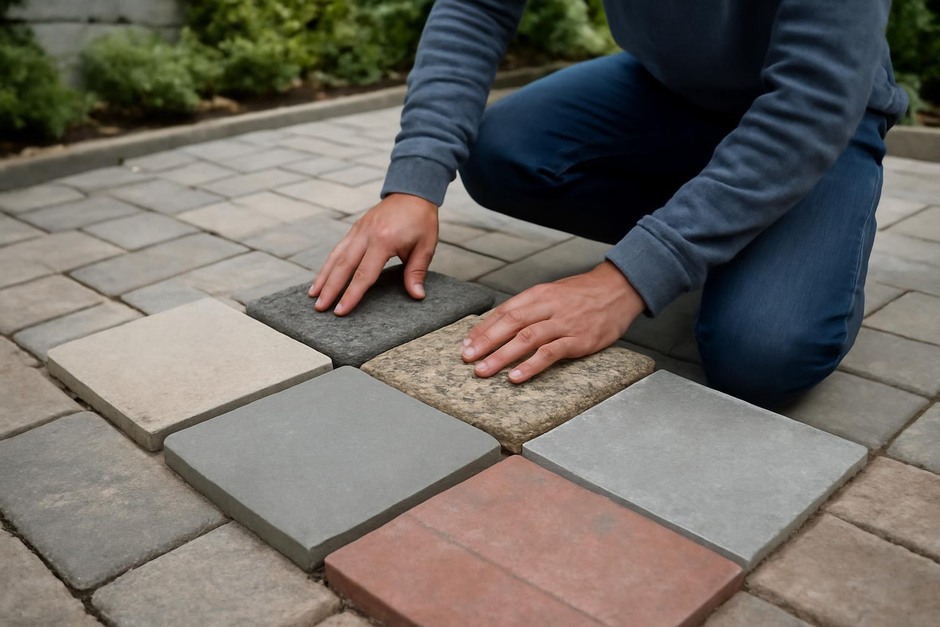
Five Mini-Tests to Choose Paving for a Small Courtyard
Choosing paving for a tight courtyard involves more than aesthetics. Materials behave differently under rain, foot traffic, sun and maintenance regimes. Rather than relying on catalog specs alone, try five small experiments that build one useful skill: rapid, comparative evaluation of candidate paving materials at real scale and in context. Each test is quick and inexpensive and reveals a distinct property. Together they help you weigh trade-offs between durability, drainage, comfort and upkeep.
How to use these experiments
Collect samples or identify a short run of existing paving options (concrete slab, clay brick, compacted gravel, permeable paver, timber decking). Run the experiments on the same day and in the same place where possible, so sun and moisture conditions match. Record observations in a simple notebook or phone photo log. The experiments are ordered from fastest and least invasive to slightly more involved, so you can stop once you have the information you need.
Materials and minimal tools
- Small samples of each paving material (one tile, a brick, a 300×300mm decking plank, a handful of gravel), or identify short sections on-site.
- Bucket of water, spray bottle, or garden hose with spray attachment.
- Kitchen thermometer or infrared surface thermometer (optional).
- Small weights (a filled bag, a backpack) and a 30–50 mm steel plate or piece of plywood to distribute load.
- Coarse sandpaper or a small bottle of cooking oil for stain test.
- Notebook and camera.
Experiment 1 — Wet-surface slip and texture check (5–10 minutes)
Why: Slipperiness under wet conditions is a frequent safety and comfort issue, especially where water collects or people walk in wet shoes.
- Wet each sample thoroughly with the spray bottle or hose and let a thin film remain.
- Place your bare foot and then a shoe sole on the wet surface and shift weight slowly to feel grip. Note if footsteps feel secure or if there is a sudden slip.
- Rub your thumb over the wet surface to sense micro-texture; coarse textures usually provide more grip but trap dirt.
Interpretation: High friction materials are safer but may be rough on bare feet and harder to sweep clean. Smooth stones and polished concrete can be slick unless textured.
Experiment 2 — Drainage and puddling test (10–20 minutes)
Why: Ponding reduces safety, accelerates staining, and affects plant health in planted courtyards.
- Place a shallow tray or use the bucket to pour a measured amount (5–10 liters) of water over each material area or sample installed on a substrate that mimics the real base.
- Time how long water takes to disappear or to stop pooling. Observe whether it runs off, infiltrates, or spreads across seams.
Interpretation: Permeable pavers and gravel drain fast but may need subbase design. Solid concrete drains slowly unless sloped; minor slopes or strategic joints are essential to prevent ponding.
Experiment 3 — Comfort and thermal behavior (10 minutes plus optional hour)
Why: Surface temperature affects use during sunny days and the sensation underfoot in barefoot zones.
- Use a thermometer to measure surface temperature mid-afternoon on a sunny day, or hold your hand/foot briefly and judge heat.
- For an accelerated check, place a piece of cardboard under a sample in the sun for 30–60 minutes and compare warmth.
Interpretation: Dark dense materials (asphalt, dark concrete) store heat and remain hot; lighter tones and porous materials stay cooler. Timber heats unevenly but feels warmer underfoot than stone at the same temperature.
Experiment 4 — Load and settlement simulation (10–15 minutes)
Why: Some materials can crack, rut, or shift under concentrated loads such as planters, furniture or vehicles.
- Place the weight on the sample using the steel plate or plywood to simulate concentrated load. Leave for several minutes then remove.
- Look for visible compression, movement at joints, or surface cracking. For modular systems, try lifting an edge to test interlock.
Interpretation: Loose gravel shifts easily under load; thin concrete or poorly supported pavers may crack. Proper subbase design changes the conclusion—this test shows sensitivity to load rather than inevitable failure.
Experiment 5 — Maintenance and staining trial (15 minutes plus observation over days)
Why: Everyday life introduces stains from soil, plant sap, oil and food; ease of cleaning matters over a material’s life.
- Smear a small amount of cooking oil, crushed leaf or potting soil on each sample and let it sit for 24–72 hours.
- Attempt removal with water, a brush, and then a mild detergent. Note residue left and effort required.
Interpretation: Porous materials absorb stains and require sealing or more frequent cleaning. Smooth, glazed surfaces resist staining but can hide scratches.
Bringing the results together
Assign simple scores for each test (for example 1–5) and sum them, but treat scores as prompts, not rules. Consider the courtyard’s primary uses: barefoot relaxation favors timber or textured stone; heavy planters and service access favor robust pavers with proper subbase; tight budgets might accept more maintenance with gravel. The experiments show how materials behave in your climate and with your habits—information that helps you design sensible construction and maintenance details.
These mini-tests are pragmatic tools to sharpen material judgment. They don’t replace professional structural or drainage design where loads, frost, or municipal requirements apply, but they do let you compare options quickly and make better-informed choices for the small courtyard scale.